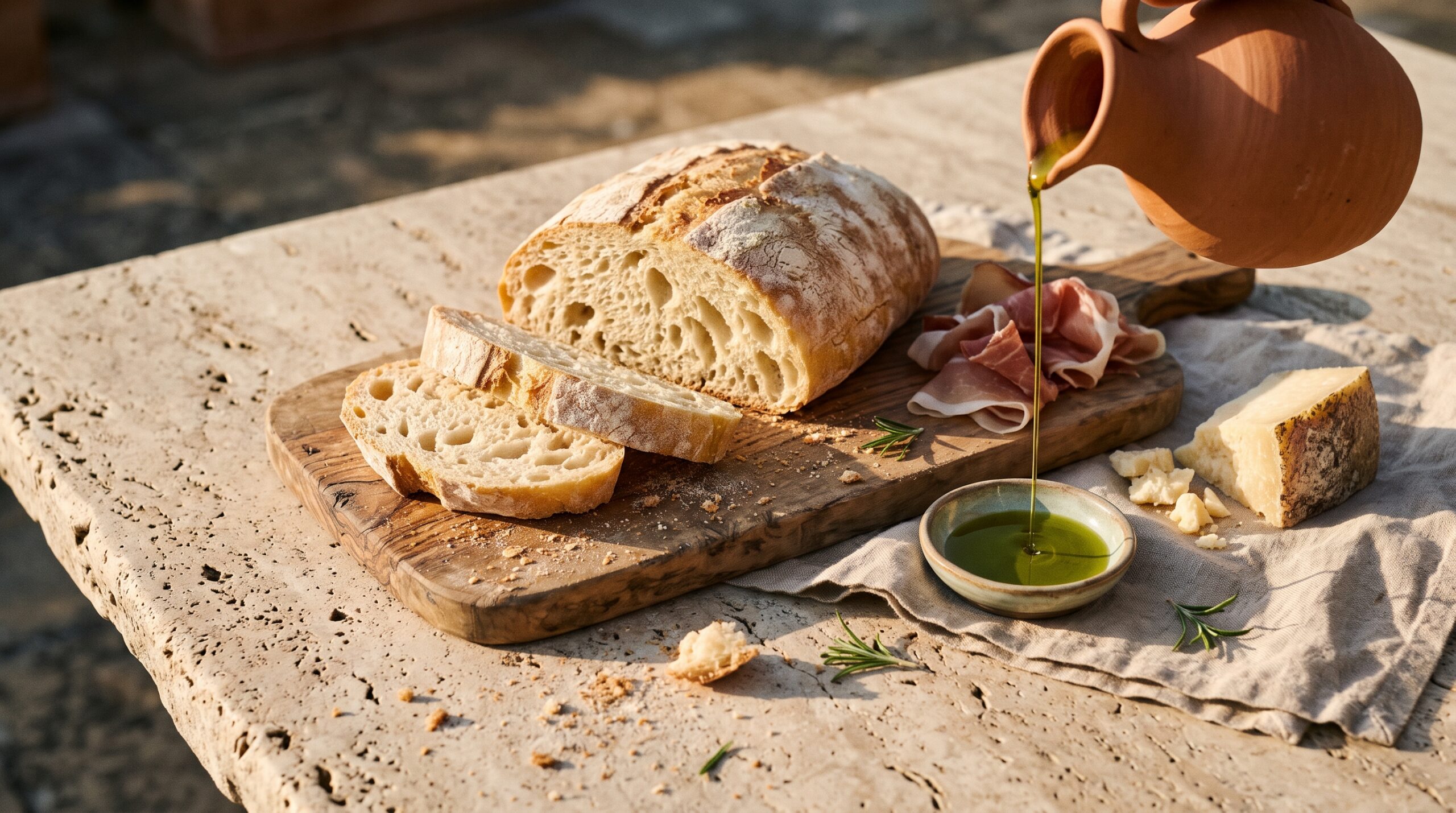
Picture this. You’re in central Italy, hungry and happy, and someone hands you a gorgeous loaf. The crust is blistered and golden. The crumb is soft and airy. It smells like a wheat field on a warm afternoon. You take a big, eager bite and your face does something complicated.
Where’s the salt?
Welcome to pane sciocco, also called pane sciapo, which translates roughly to “foolish bread” or “bland bread.” The name is a little rude, and the loaf couldn’t care less. It has been quietly refusing salt for the better part of nine centuries, and the story of why is part trade war, part tantrum, and part culinary genius. It’s also a great story to tell over dinner, which is exactly why we love bringing it to tables along the Emerald Coast at Private Chef Destin.
The Great Salt Standoff
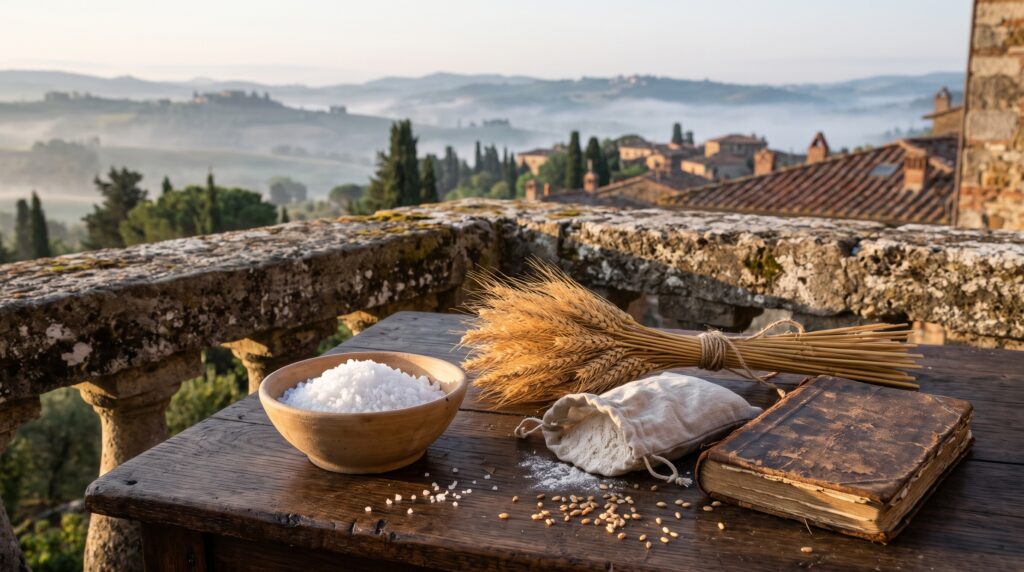
Rewind to twelfth-century Tuscany. Italy isn’t a country yet, just a feisty patchwork of city-states that squabble over trade routes, farmland, and bragging rights. Florence is on the rise, with banking, wool, and money to burn. But Florence has a problem: it’s landlocked. No coastline, no sea, no salt pans.
Its neighbor and rival Pisa has all three. Pisa controls the coast, the mouth of the Arno, and the salt that every inland kitchen depends on.
Now, salt in the Middle Ages was no sprinkle-it-on-your-fries situation. It was how you kept meat, fish, and cheese from spoiling. It was currency, power, and a very juicy tax target. According to the popular telling, Pisa saw its chance. Tariffs on salt headed inland went up and up, and in the nastiest stretches of the feud, the supply may have dried up altogether.
Florence’s bakers, so the story goes, looked at the new price tag and said, in effect, “Absolutely not.”
They weren’t about to hand over their hard-earned coins for the privilege of seasoning a loaf of bread. So they stripped the recipe down to three things: stone-ground soft wheat flour, water, and a wild sourdough starter called lievito madre. No salt. No tribute. No problem.
A quick note from your friendly storyteller: historians love to debate how neatly this legend lines up with the documents. Salt taxes were real, and so were the rivalries. Whether one dramatic bakers’ revolt launched the whole tradition, nobody can say for sure. But honestly? It’s too good a story to leave out, and it explains why the bread tastes the way it does.
Dante Had Opinions
Even the poets got involved. In the Paradiso, Dante Alighieri, exiled from Florence and none too happy about it, famously laments how salty the bread of strangers tastes and how hard the stairs are in someone else’s house. Read that again with the salt story in mind. To a Florentine, bread was supposed to taste a certain way. Anything else tasted like exile.
That gives you a sense of how deep the bread runs in the Tuscan psyche. It was never just food. It was home in edible form.
The Plot Twist: Nobody Went Back
Here’s the part that makes this story so charming. Eventually the embargoes and tariffs faded, and salt flowed freely again. Florentine bakers could have gone right back to the old way. They didn’t.
By then the entire regional cuisine had grown up around that mild, wheaty loaf. What started as a protest had become tradition, and what started as tradition had become identity. The bread outlived the feud that created it, which is roughly the culinary equivalent of the guy who walks out of an argument and keeps the new haircut forever.
Wait, Why Does Bread Without Salt Even Work?
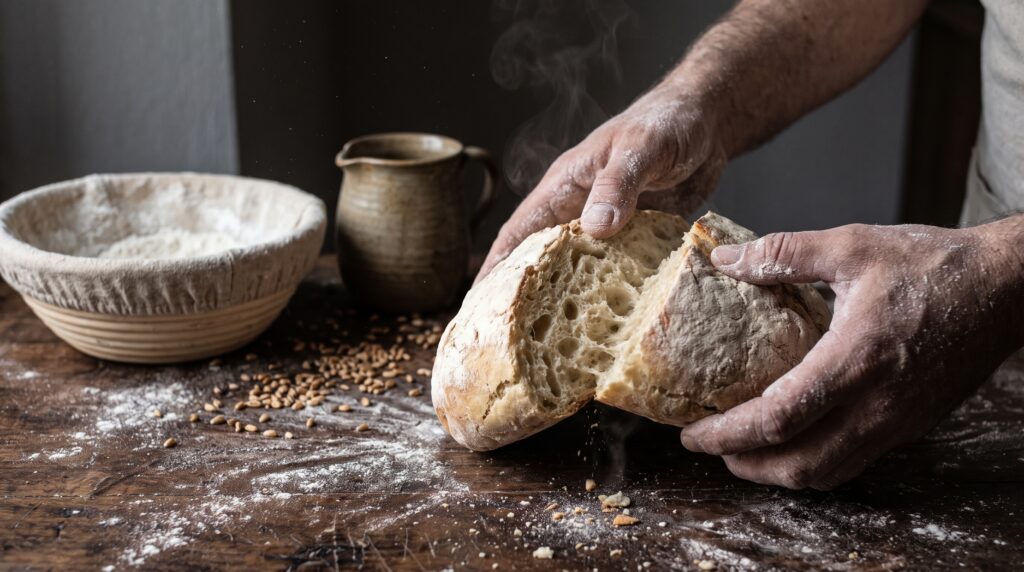
Fair question. Any baker will tell you salt does a lot of heavy lifting. It tightens the gluten network, tames the yeast, and helps the crust brown. Leave it out and you invite trouble: dough that gets floppy, ferments wildly, and can come out flat and sad.
Tuscan bakers got around all that the old-fashioned way, with patience. Long, slow fermentation with a natural starter develops its own complex organic acids, which give the crumb a gentle sweetness and a faintly nutty depth. Add a careful hand with temperature, a light touch in shaping, and the right flour, and you get an open, honeycomb crumb under a crackly crust. No salt required, only time and a little stubbornness.
The Secret Is What’s Next to It
Here’s where it gets fun. Tuscan food is not shy. We’re talking aged sheep’s milk cheese with real attitude, cured meats that taste like a hug from a salt lick, peppery olive oil that makes you cough on purpose, and ragùs that have been simmering since before you woke up.
Pair all of that with salty bread and your taste buds would wave a white flag by the second course.
Pane sciocco is the calm friend at the party who makes everyone else look good. It soaks up sauce, tempers richness, and gives your palate a place to rest between bold bites. In Tuscany, the bread isn’t there to compete with dinner. It’s there to make dinner better.
Stale Bread: The Glow-Up
Without salt to hold onto moisture, pane sciocco dries out faster than a typical loaf. Many a cook would call that a flaw. Tuscans called it Tuesday.
This is cucina povera, the beautifully resourceful “poor kitchen” philosophy of the Italian countryside, where wasting food is practically a moral failing. Day-old bread didn’t go in the bin. It got promoted. Some of Italy’s most beloved dishes exist precisely because the bread went stale:
Panzanella: A bright summer salad where old bread gets a quick soak in water and vinegar, a good squeeze, and a toss with ripe tomatoes, red onion, basil, and a generous pour of olive oil.
Ribollita: The name means “reboiled,” and it’s a rich, hearty winter soup of beans, cavolo nero, and vegetables, thickened with chunks of leftover bread. It’s famously better the next day.
Pappa al Pomodoro: A thick, comforting tomato and bread porridge perfumed with garlic and basil. It’s baby food for grown-ups, in the best way.
Fettunta: Bread toasted over hot embers, rubbed with raw garlic, and soaked in freshly pressed olive oil. It’s three ingredients and zero apologies.
Every one of these dishes tastes best when the bread is unsalted, because the seasoning comes from everything else in the bowl.
From Chianti Hills to the Gulf Coast
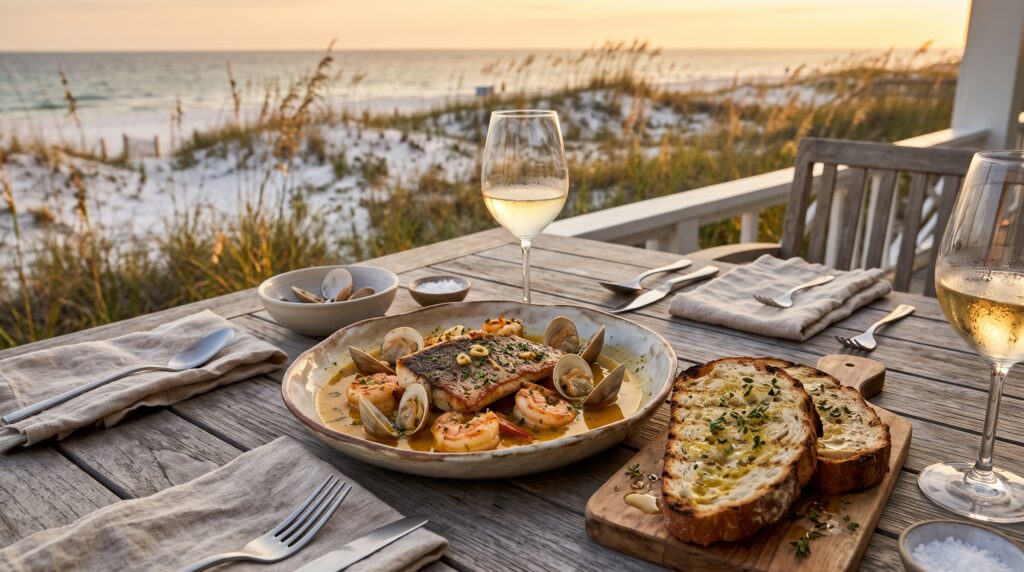
Now, you might be wondering what a medieval Tuscan loaf has to do with a sunset on the Gulf. Quite a lot, as it turns out.
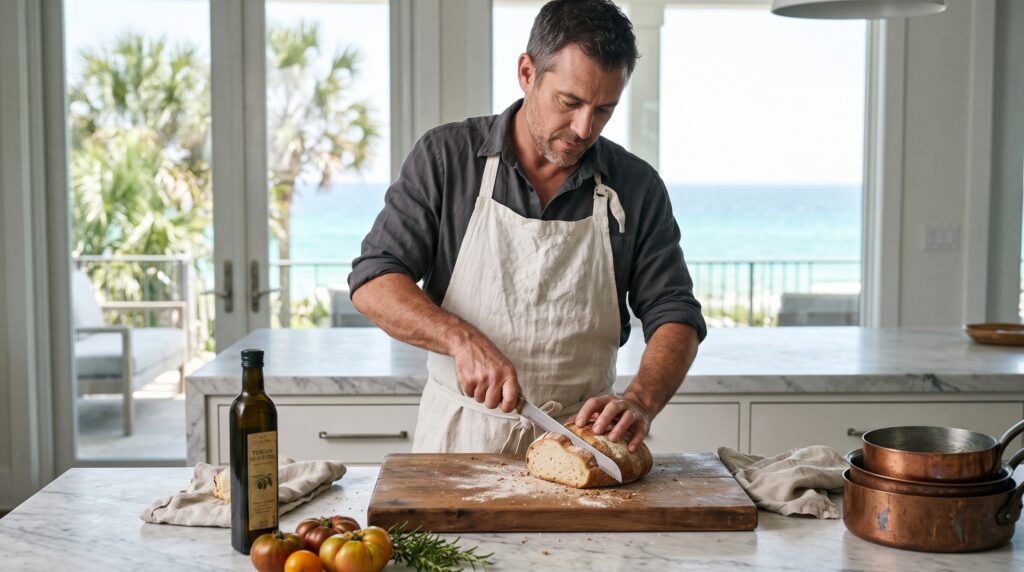
Chef Damiano, brings authentic Tuscan cooking directly into your vacation rental, your family home, or your anniversary dinner. No waiting for a table. No fighting crowds. Our culinary team arrives, takes over the kitchen, and lets the aromas of traditional Tuscan cooking do the welcoming. You relax, your guests relax, and every course is made right in front of you.
Getting pane sciocco right is not a shortcut kind of project. Without salt to keep the yeast in check, the dough needs close attention: the flour, the hydration, the timing, and the temperature all matter. Handle it too roughly and you lose that airy interior. Do it right and you get a crackly crust and a tender, open crumb that tastes like it came out of a wood-fired oven in the Chianti hills, even if the view out your window is the Gulf of Mexico.
Tuscan Bread Meets Emerald Coast Seafood
You might assume an inland bread would feel out of place in a town famous for its fresh Gulf catch. It’s the opposite. Because pane sciocco is so clean and neutral, it lets delicate seafood stay the star while still giving hearty land-based dishes something to lean on. It plays nicely with everyone.
Following the Bread, Course by Course
Here’s how a single loaf can steal the show over the course of one dinner party:
The antipasti. The bread arrives warm, alongside salty Prosciutto di Parma, savory Tuscan salami, chicken liver crostini, and aged Pecorino Toscano drizzled with wildflower honey. The bread is the peacemaker, and every bite lands in balance.
The first course. Handmade pasta, perhaps tossed in a wild boar ragù or a nutty brown sage butter, comes with a piece of bread on the side for fare la scarpetta. That’s the gloriously Italian habit of wiping your plate clean with bread. It’s not bad manners. It’s a compliment.
The seafood course. The bread gets a quick char on the grill and a rub of garlic, then lands next to local Destin red snapper braised in tomatoes, capers, and white wine. Coastal meets countryside, and nobody complains.
The olive oil moment. Sometimes simple wins. A slice of bread, a pour of peppery, unfiltered Tuscan extra virgin olive oil, and suddenly everyone at the table is discussing grassy, herbaceous notes like seasoned sommeliers.
The Last Bite
The lesson of pane sciocco is surprisingly modern. The best things in the kitchen rarely come from excess. They come from purpose, balance, and respect for good ingredients. A bread born out of scarcity and spite became a canvas that has delighted diners for nearly nine hundred years. Not bad for a loaf called “foolish.”
So, whether you’re hosting an anniversary dinner, a family reunion, consider turning your dining room into a private Tuscan trattoria for the night. Warm bread, handmade pasta, good olive oil, along with family and friends make for the perfect dinner.
Ready to taste the history for yourself? Head over to our Contact Us page to reserve your date, customize your menu, and let Private Chef Damiano craft a dinner your guests will be talking about long after the last crumb is gone.